Natural evolution.
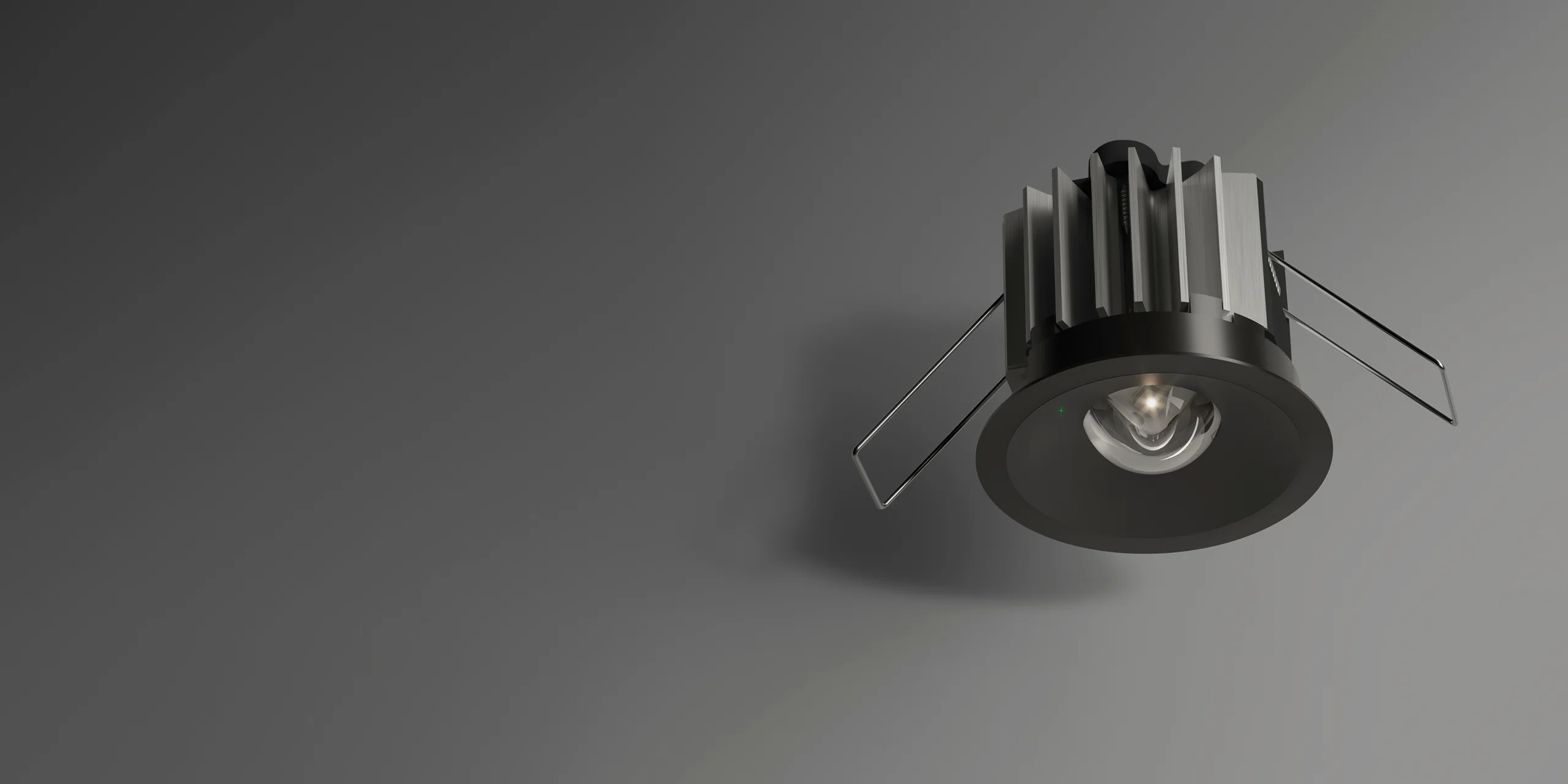
The current IZAR luminaire is the result of a number of improvements that make it more efficient, more technologically advanced and that delivers exceptional performance:
- The optical assembly emits more light and distributes it more evenly.
- The electronic components have been upgraded: they are the same as those used in SPICA and VIRSC luminaires.
- It comes in a number of models compliant with the regulations in different countries such as Italy and counties subject to US regulations.
IZAR has become a benchmark product that combines a compact design, easy installation and high performance. It is also available in a range of finishes, including a version with a diffuser, which makes it completely invisible on white ceilings.
Optics and lenses.
New optics designed and manufactured in-house have been added to the IZAR range. Their development was a challenge, as these types of lens components require pinpoint accuracy. Even the most negligible variation in the shape – slight internal stress, a blemish or a defect imperceptible to the naked eye – can completely alter the photometric curve.
Achieving this level of precision has only been possible thanks to state-of-the-art fully electric injection moulding technology, able to operate at temperatures in above of 90 °C, which makes it possible to manufacture parts with highly complex shapes, highly variable volumes and unbeatable accuracy.
The result is two new, upgraded optical assemblies:
Lenses of 250 lm / 1 lx
The light distribution is reminiscent of butterfly or bat wings: peak intensity at 60° and a dip at 0°. The result is a 1 lx pattern that spans the largest possible area for wider coverage.
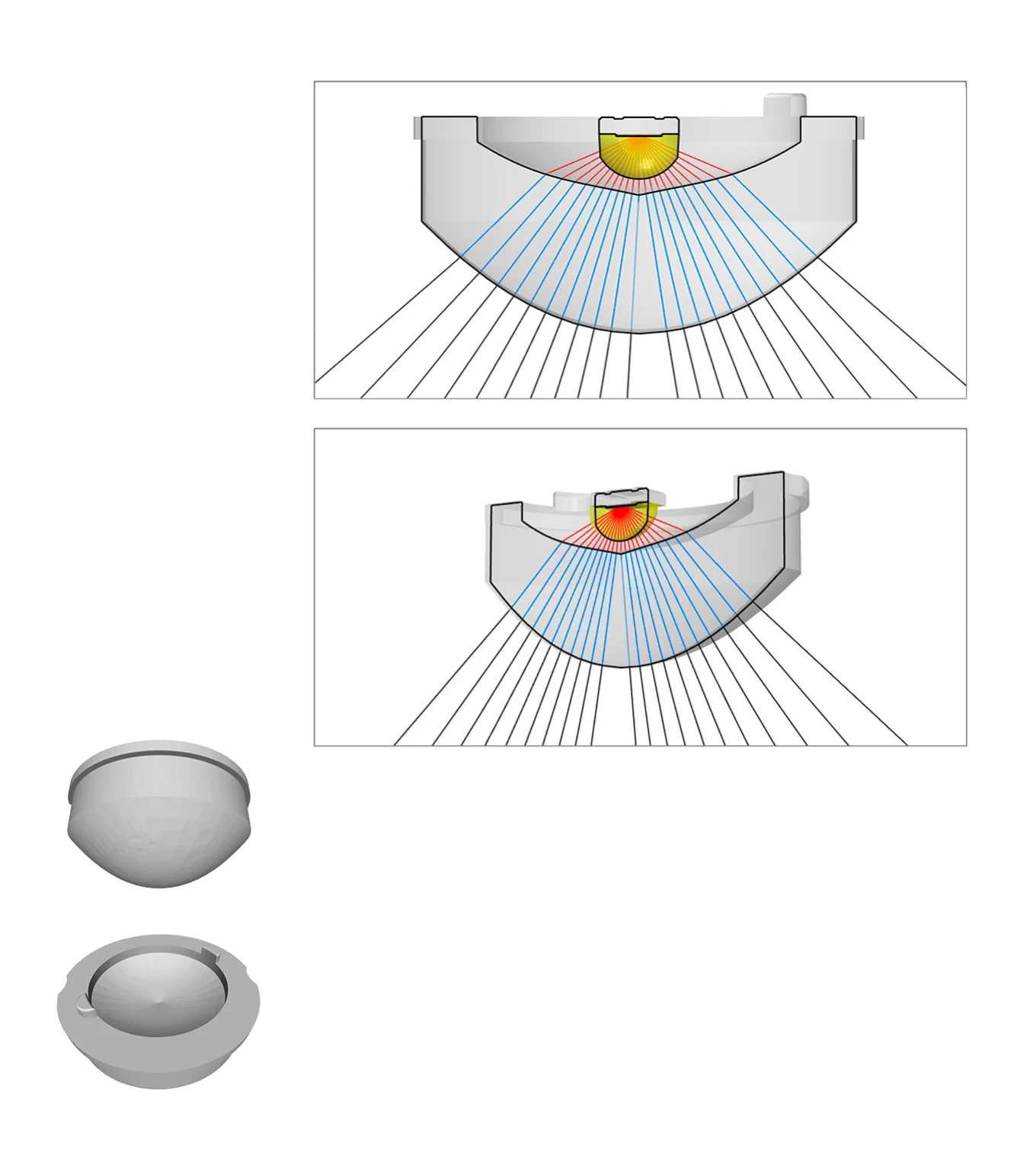
Lenses: 250 and 400 lm / 10.8 lx
They produce more rounded curves. These lenses are designed using evolutionary and genetic algorithms, and are injection-moulded in-house. Their light distribution curves peak at 0° and deliver 10.8 lx, which allows them to be fitted at a wide range of heights, whilst lighting the ground evenly and optimising the spacing between luminaires.
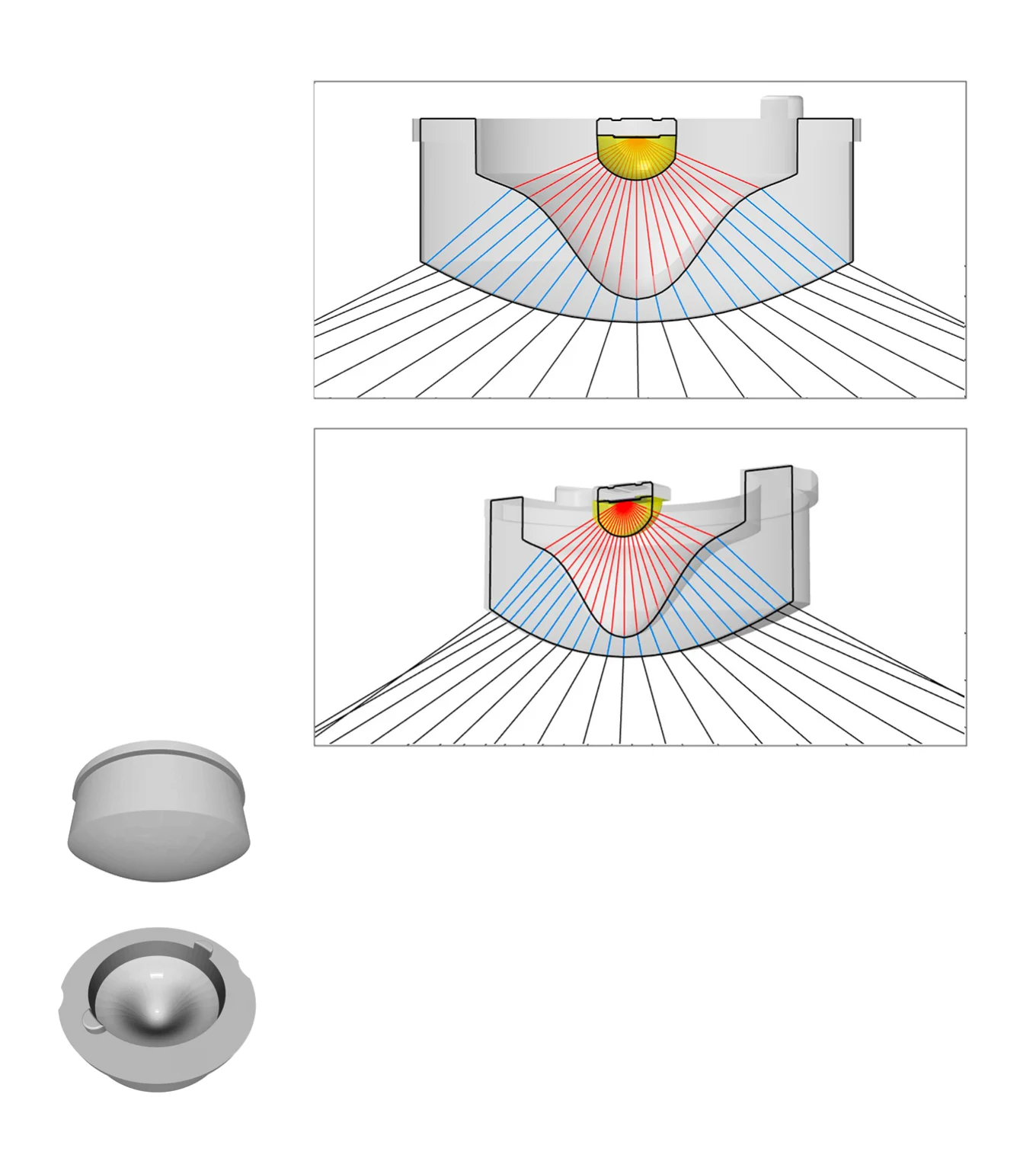
For luminous fluxes of 250 lm and a lighting requirement of 1 lx.
For luminous fluxes of 250 and 400 lm, and a lighting requirement of 10.8 lx.
Eco-standby mode.
The eco-standby mode is a system that automatically switches luminaires on or off depending on ambient light levels, thus optimising power consumption, saving energy and ensuring more efficient maintenance.
How does it work?
- Each luminaire is fitted with a light sensor that measures ambient light.
- Sensor detects that ambient light levels are low, the light changes to its “on” mode (rather than “emergency” mode).
- If the sensor detects that there is sufficient ambient light, the light switches off (it does not switch to the “on” mode).
- This system can be easily switched on or off.
What is the purpose of the eco-standby mode?
- Energy saving: It prevents luminaires from staying on unnecessarily when there is already enough light, thereby reducing energy consumption.
- Charge optimisation: The sensors enable smarter management of the maintenance charge for emergency lighting.
- More efficient maintenance: As not all the luminaires are left on all the time, they have a longer service life.
- Practical uses in different scenarios: In areas where little lighting is required at night-time, the lights can be dimmed if a particular space needs it.
- Regulatory compliance: In many countries, regulations require that emergency lighting meet certain standards throughout a building’s lifespan. The eco-standby mode helps to meet these requirements more efficiently.
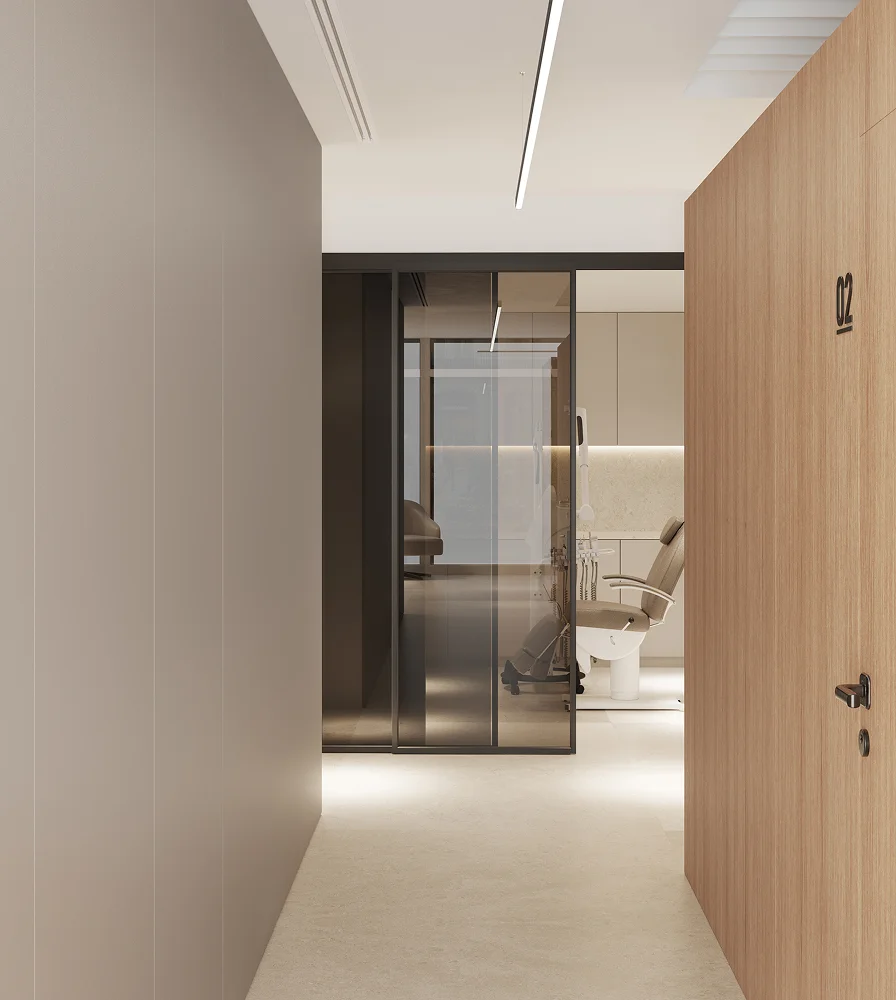
The eco-standby functionality is available on the AutoTest (A) and TCA models (with the DaisaTest centralised management system): IZAR, ZINER, BLOCK, LENS, ATRIA and NAOS.
Heat dissipation.
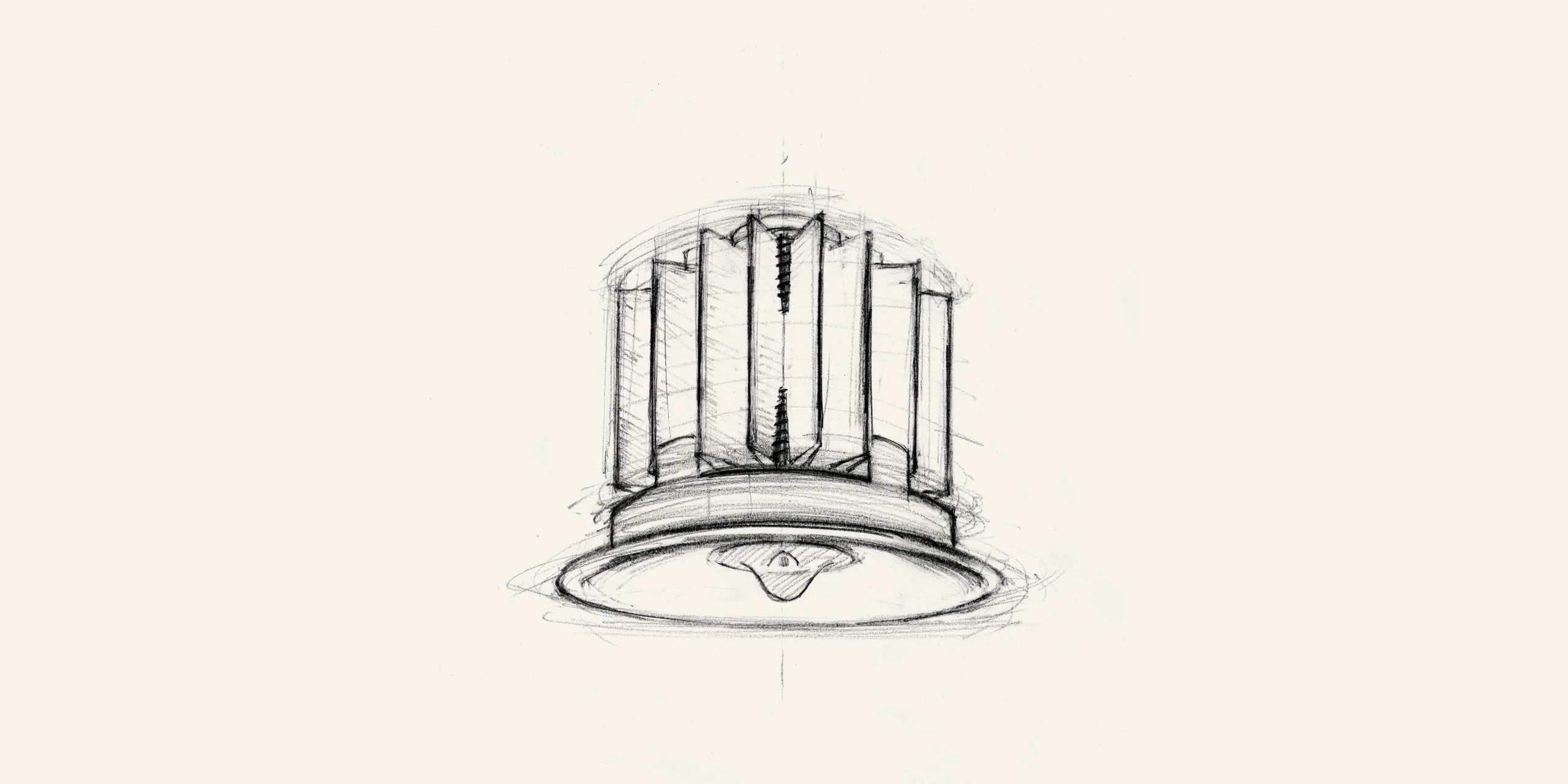
IZAR’s heat dissipation system is based on efficient conductivity and convection to keep the LEDs at their ideal operating temperature to both deliver higher performance and a longer service life. The heat sink developed for IZAR features a larger aluminium surface area in contact with the LED, which allows heat to be dissipated more quickly. Furthermore, thanks to its strategically designed slots, the structure increases the surface area in contact with the air, thus facilitating heat transfer to the outside via convection.
Slatted ceilings.
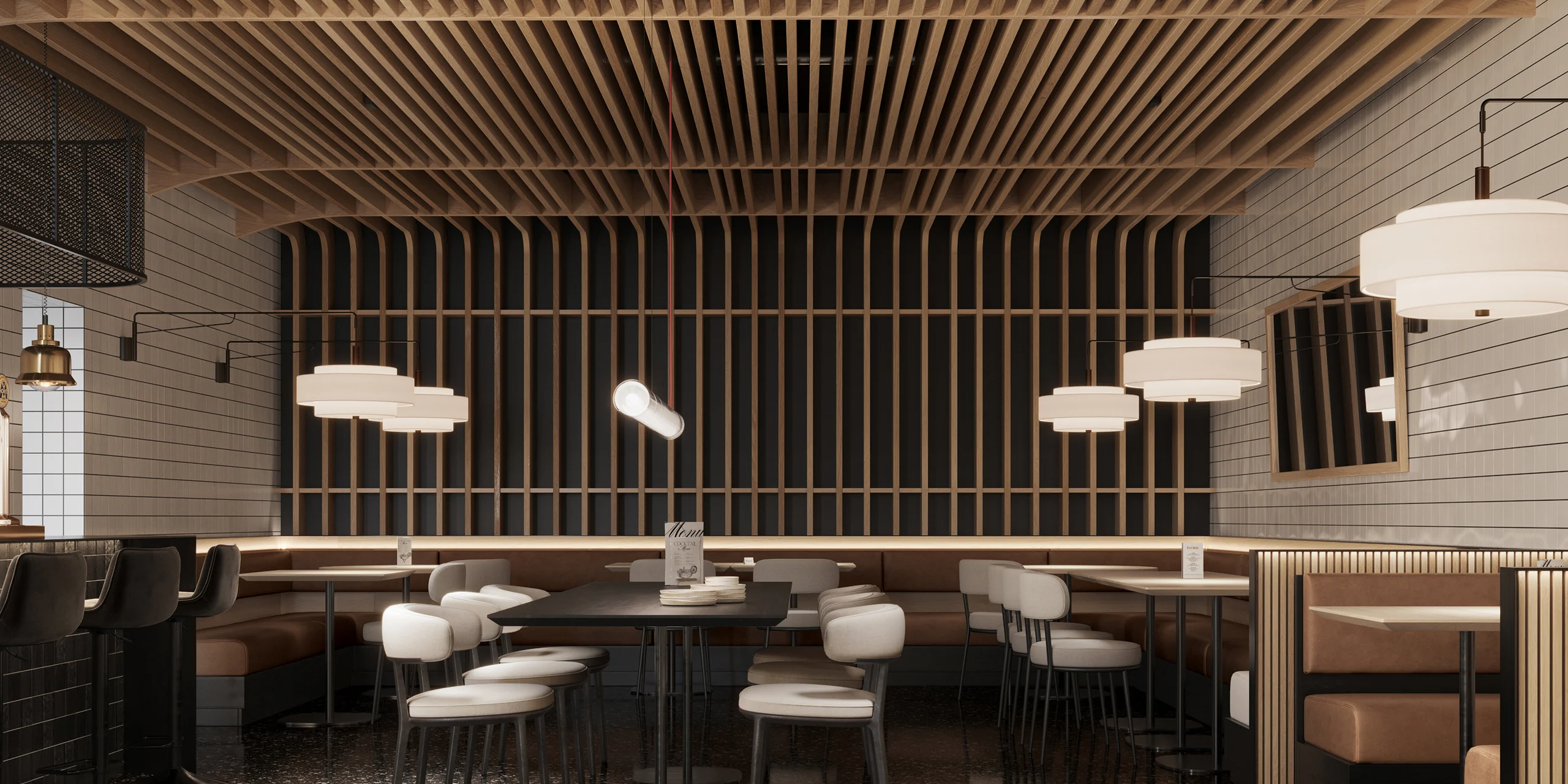
A further development are the solutions for slatted ceilings that ensure seamless integration and a flawless finish. The luminaires remain aligned without gaps to give the impression of visual continuity and harmony in spaces.
KML is a fitting with a cylindrical body into which IZAR is built in, whilst IZAR LS is a luminaire with a rectangular body made of extruded aluminium.
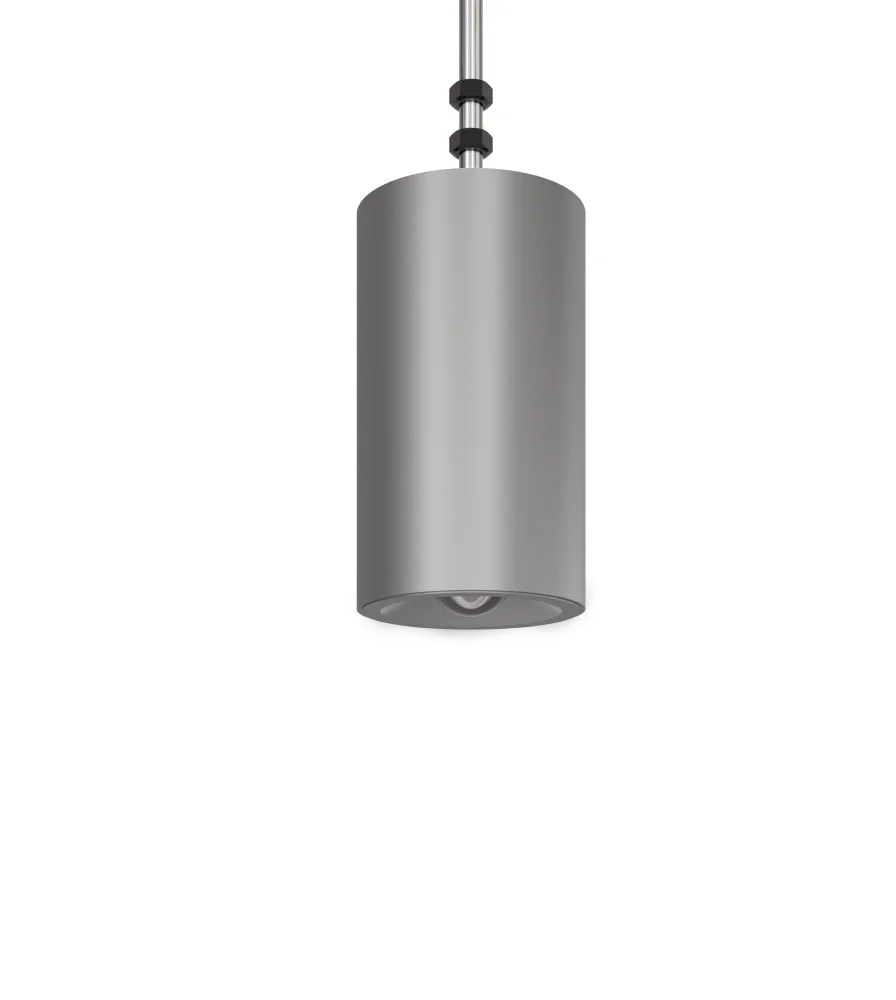
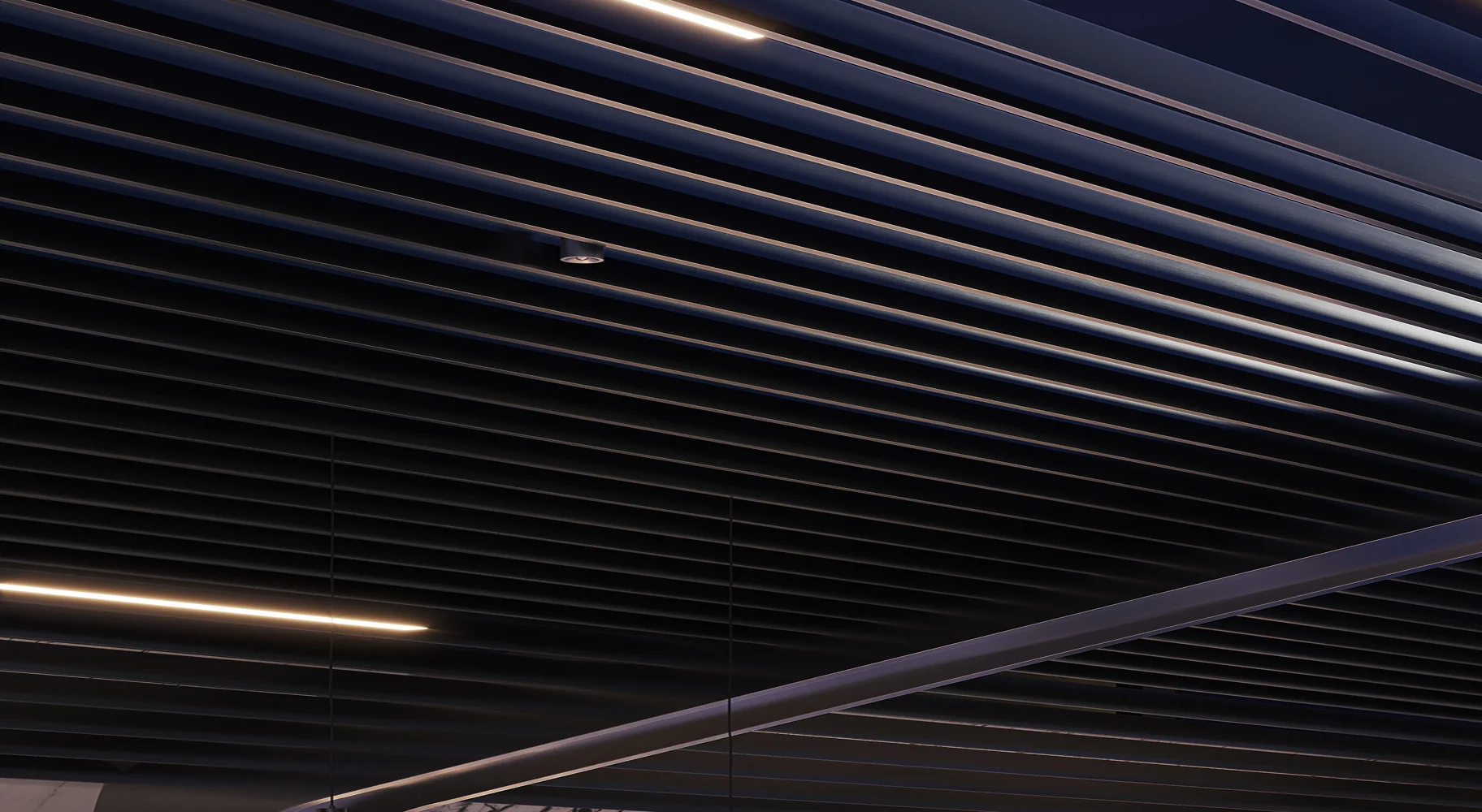
IZAR KML
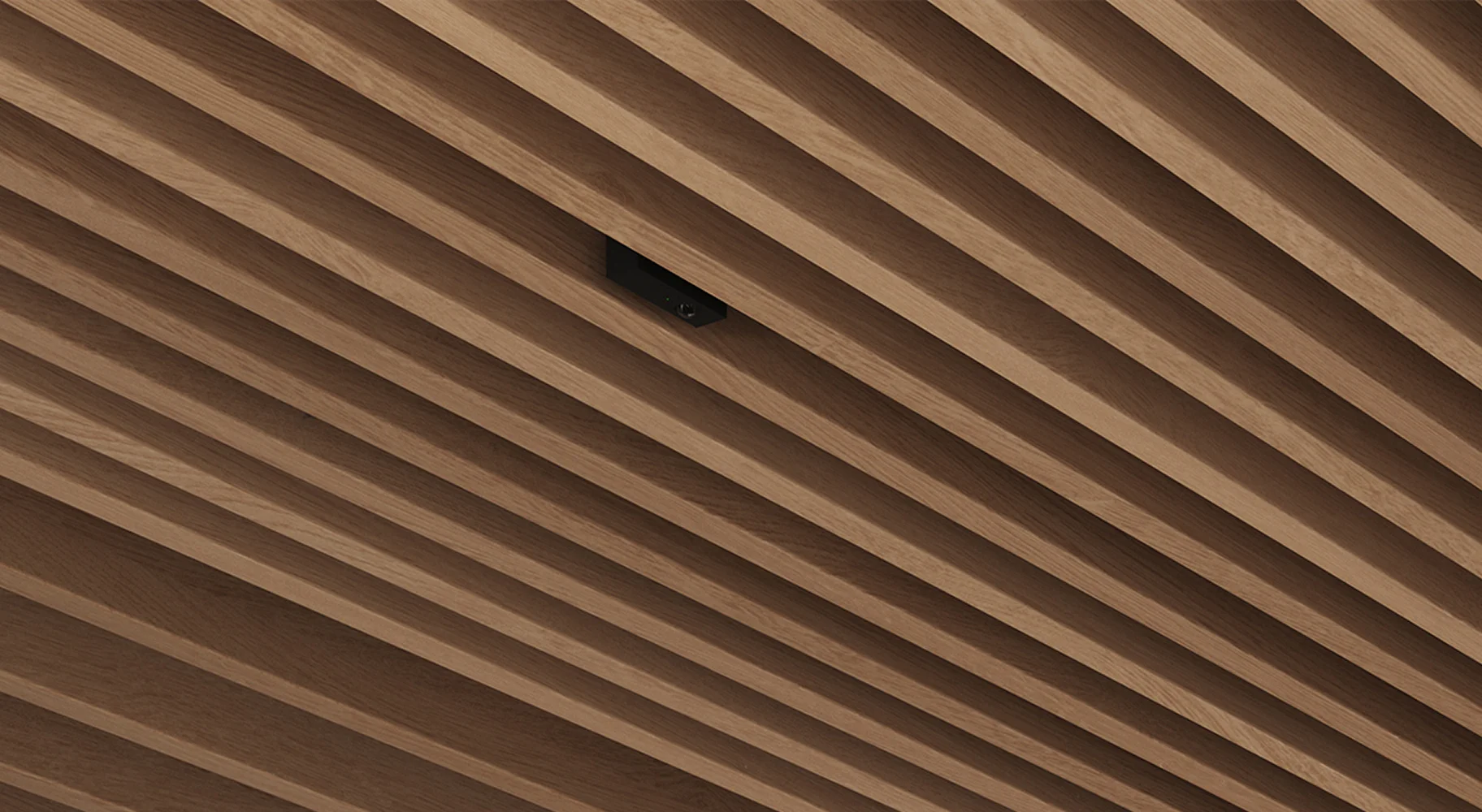
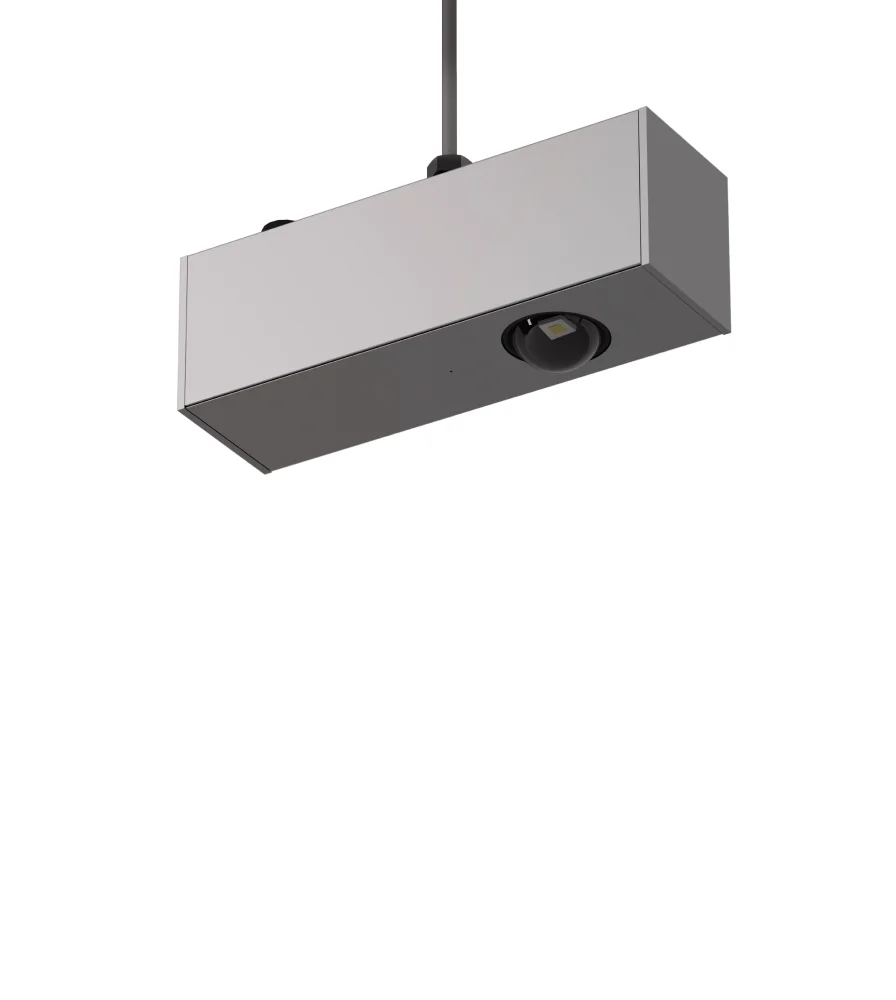
IZAR LS