Pushing the envelope is always a technological challenge.
And SPICA was no exception.
One of the major hurdles was to reduce the size of the light to a minimum while ensuring optimum heat management that provides a long life for the LED. The work done to reduce the visual impact of the LED that acts as a load/fault indicator is also remarkable.
A flat, high-refractive optic was designed specifically for SPICA, aligning it with the design of the luminaire. The design, mould manufacturing and micro-injection of technical polymer components were also achieved with nanometric precision.
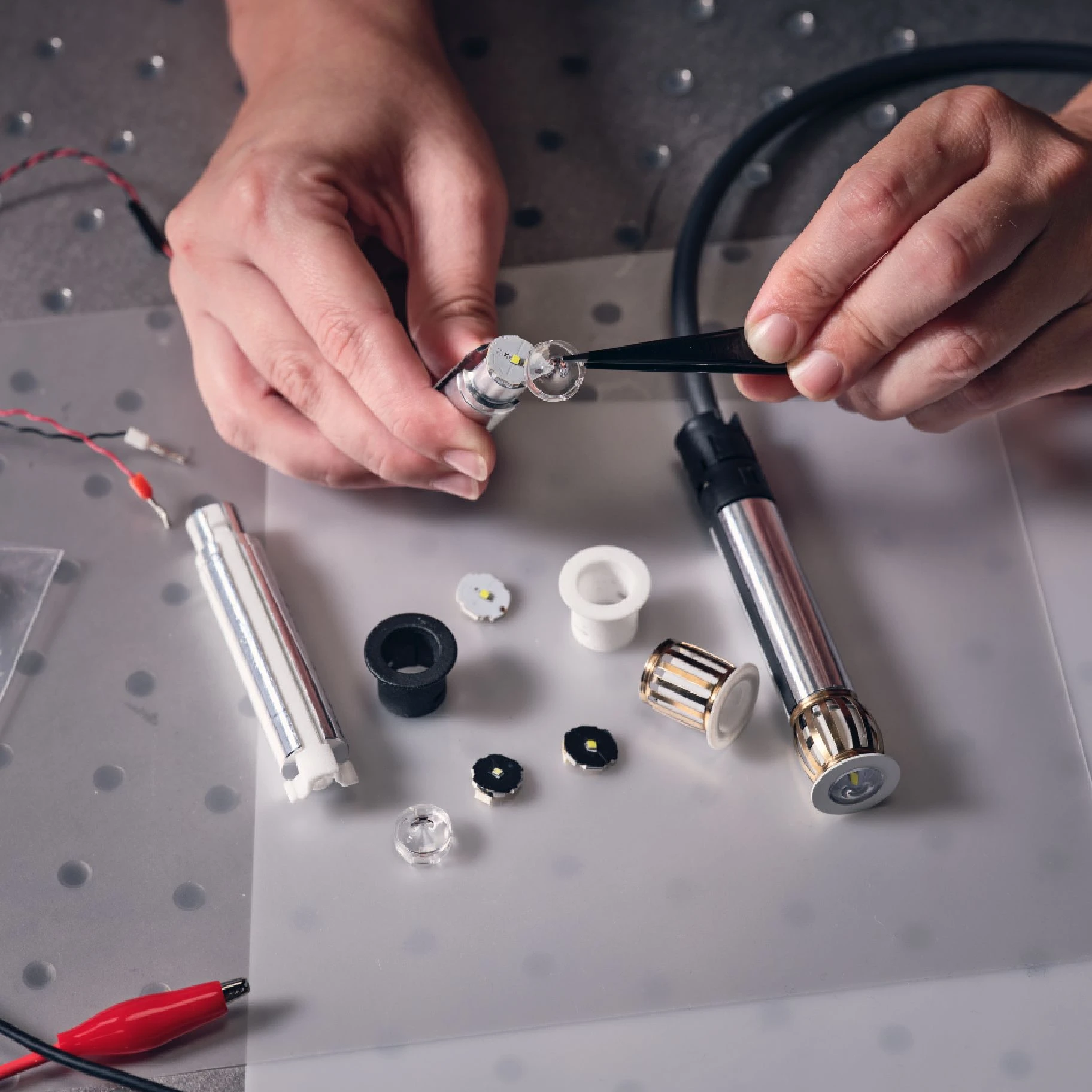
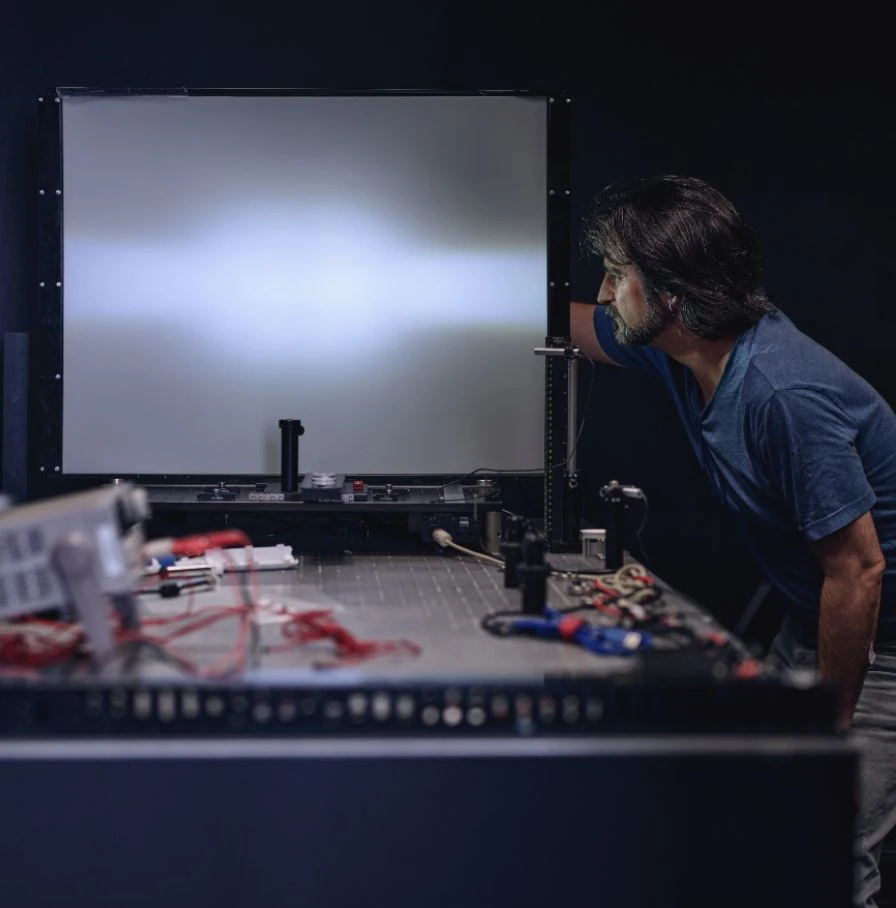
SPICA, when top performance fits into the smallest luminaire. All these efforts have produced the smallest emergency luminaire on the market, measuring a mere 20 mm in diameter and delivering exceptional performance.
Optical design: technical data and graphics.
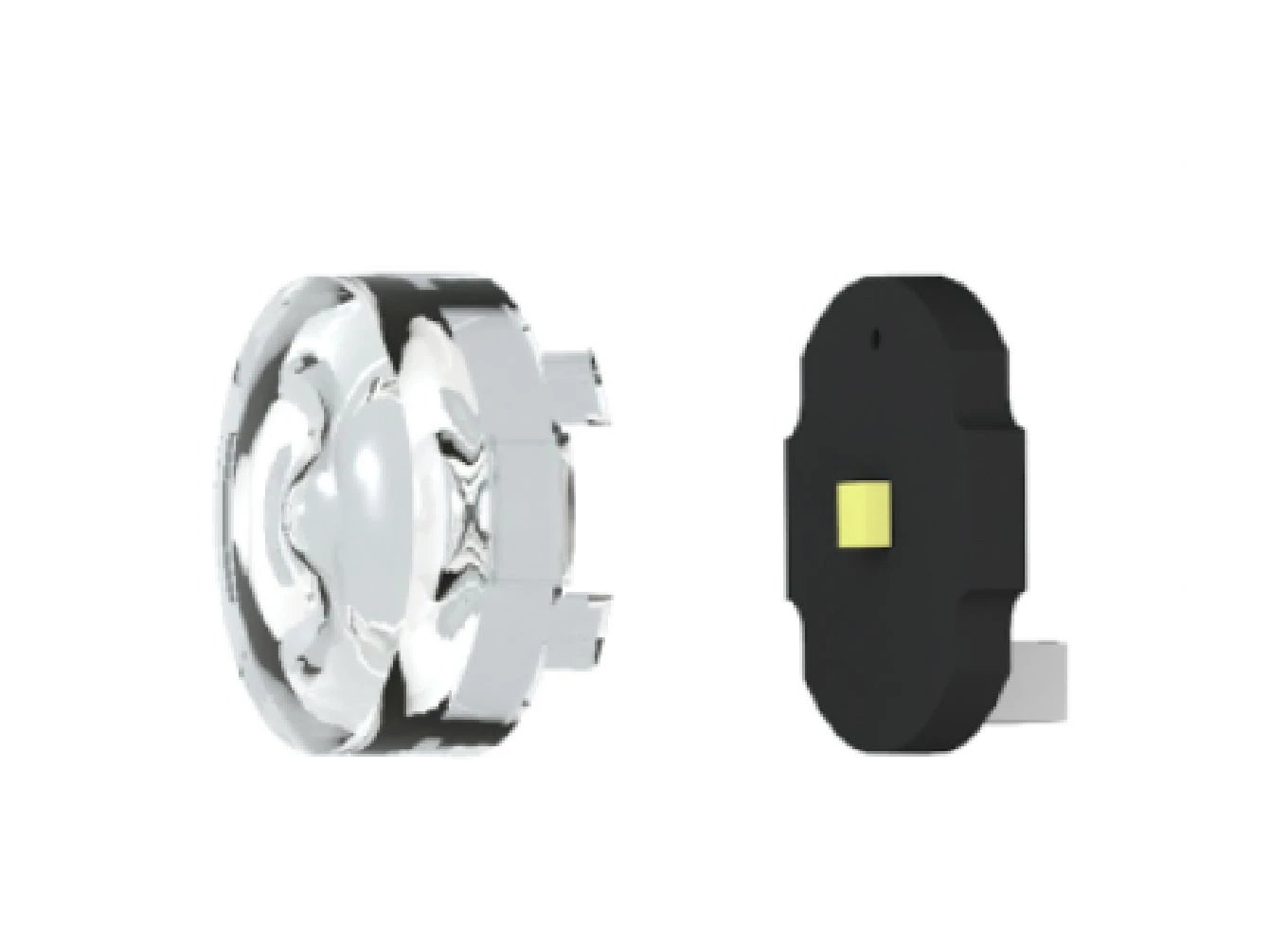
Daisalux’s Applied Optics Department has designed the lens in its entirety. This simulation shows how this lens refracts light according to Snell’s law. A state-of-the-art high-efficiency LED was selected, with a compact size: 1.6 x 1.6 mm.
With a lens design of just 12 mm in diameter and a short focal length, the LED needed to have the smallest possible surface area. This feature was critical for the refraction of light in the lens to produce the targeted optical performance.
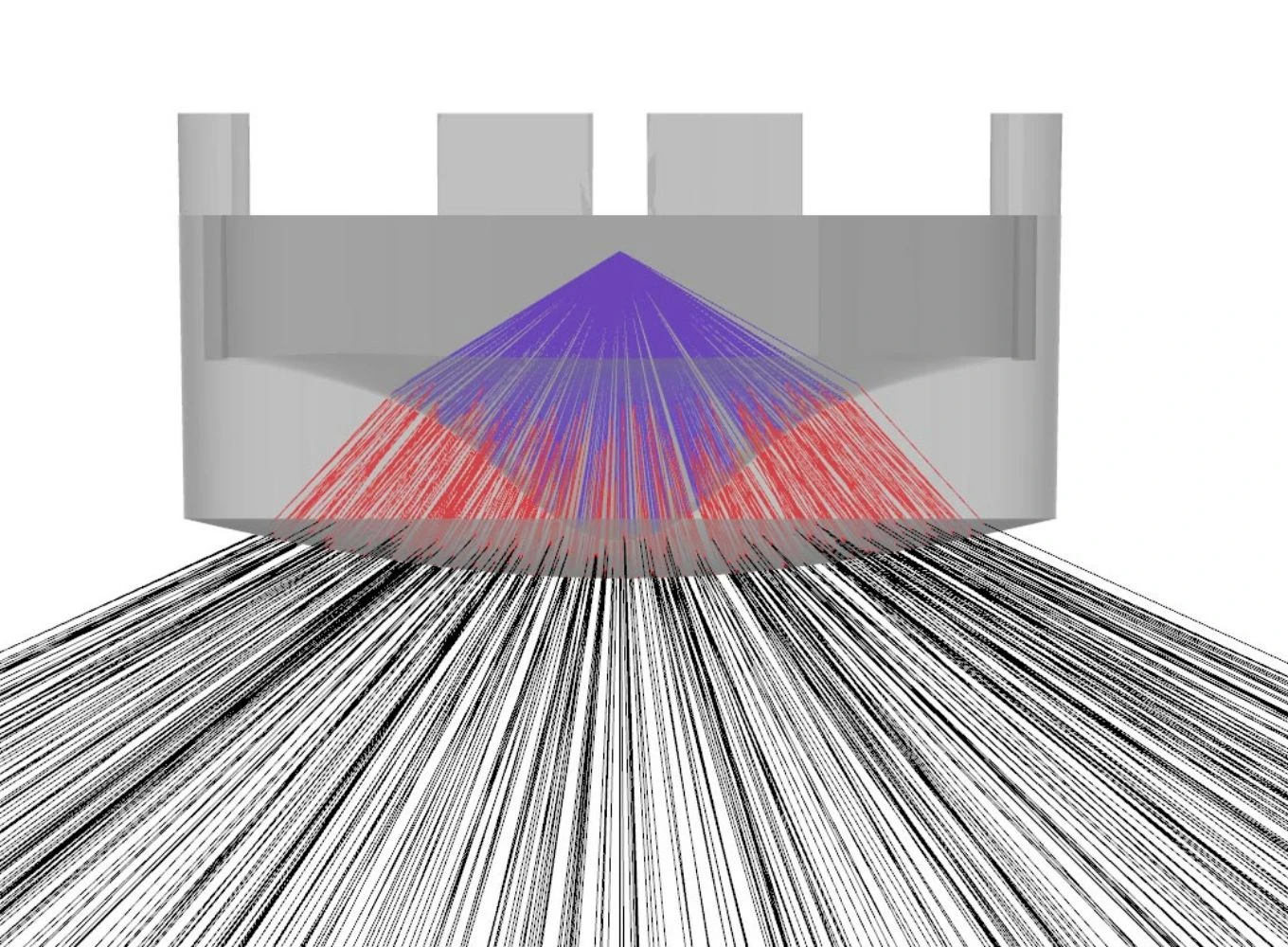
Ray tracing simulation on the lens
Model XD16 from Cree®
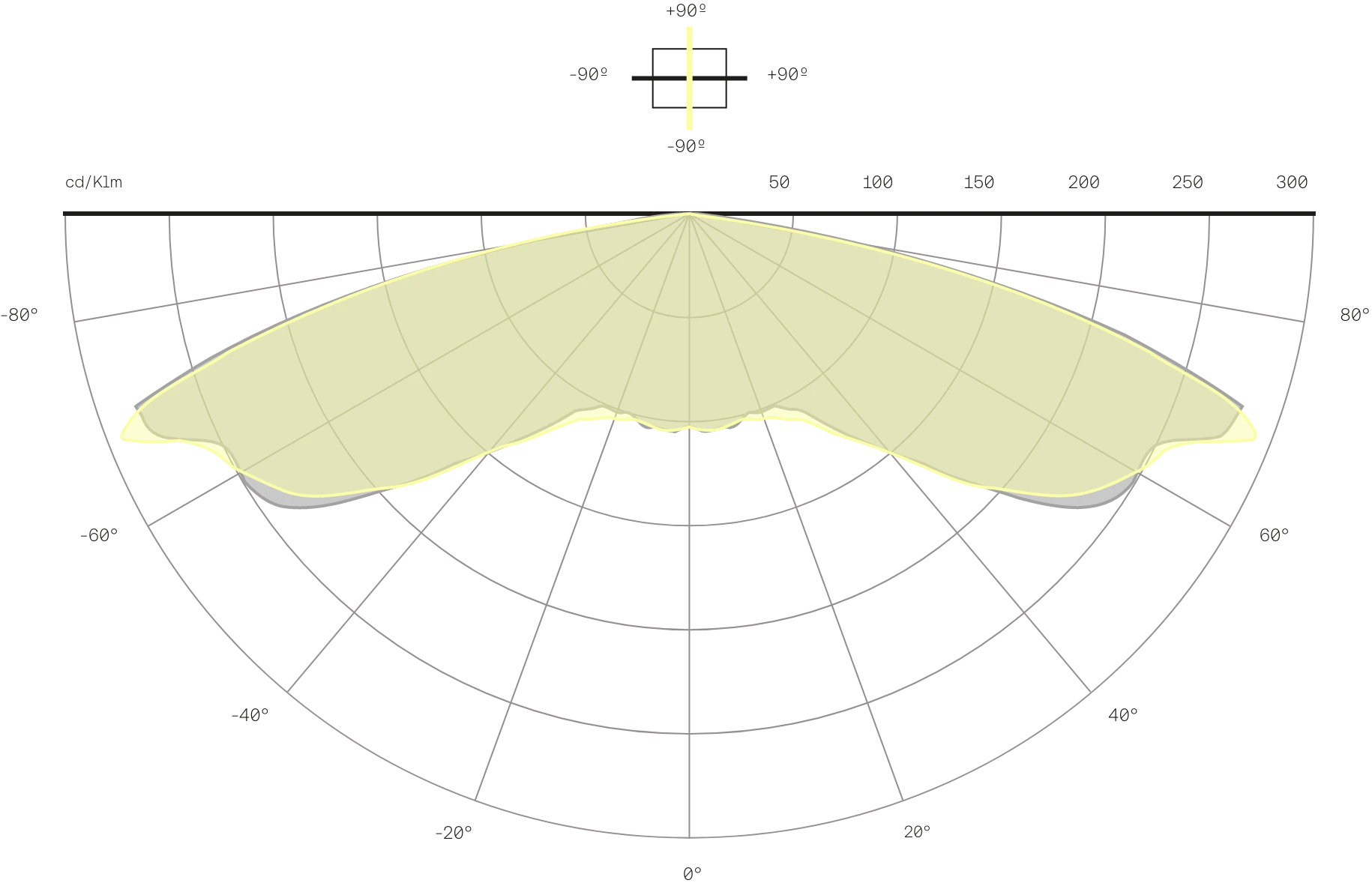
Light coverage: technical data and graphs.
The lens works by reducing the luminous intensity at angles close to 0º (with projection perpendicular to the ground), while also increasing the progressive aperture of the intensity up to angles close to 70º. This means that the luminaire’s luminous flux can be optimally harnessed, covering the maximum possible surface area with a high degree of uniformity between 0 and 1 meter above the ground.
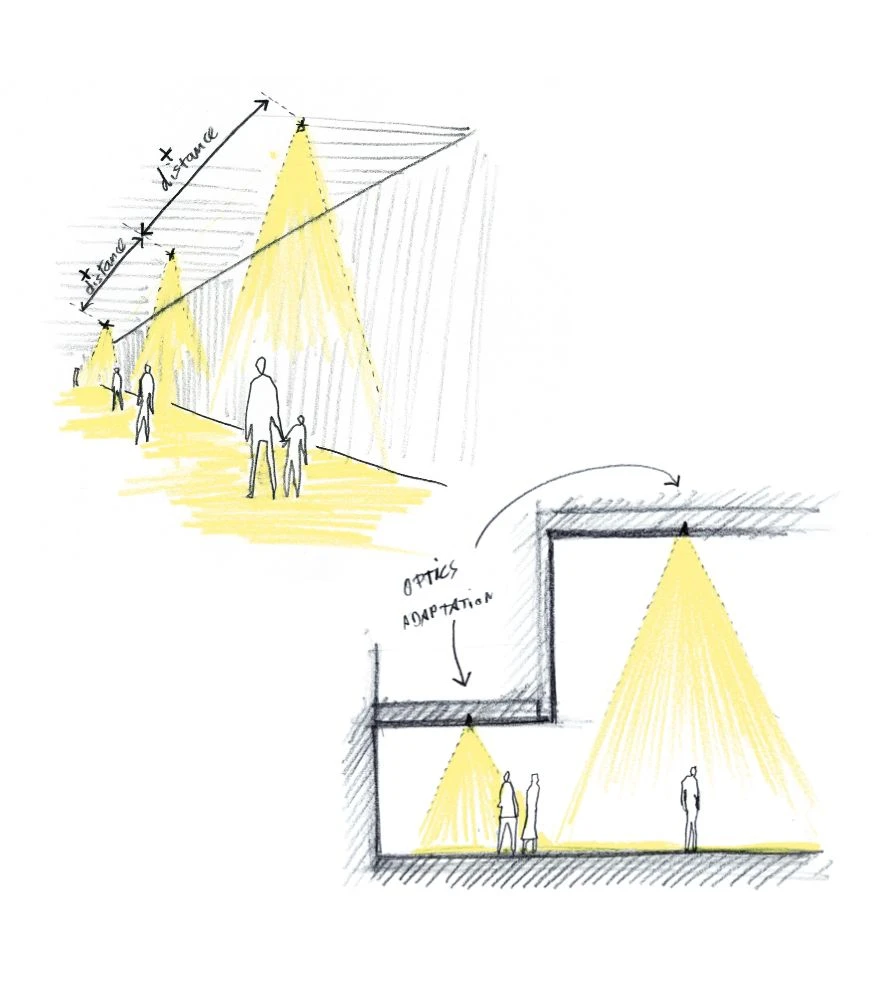
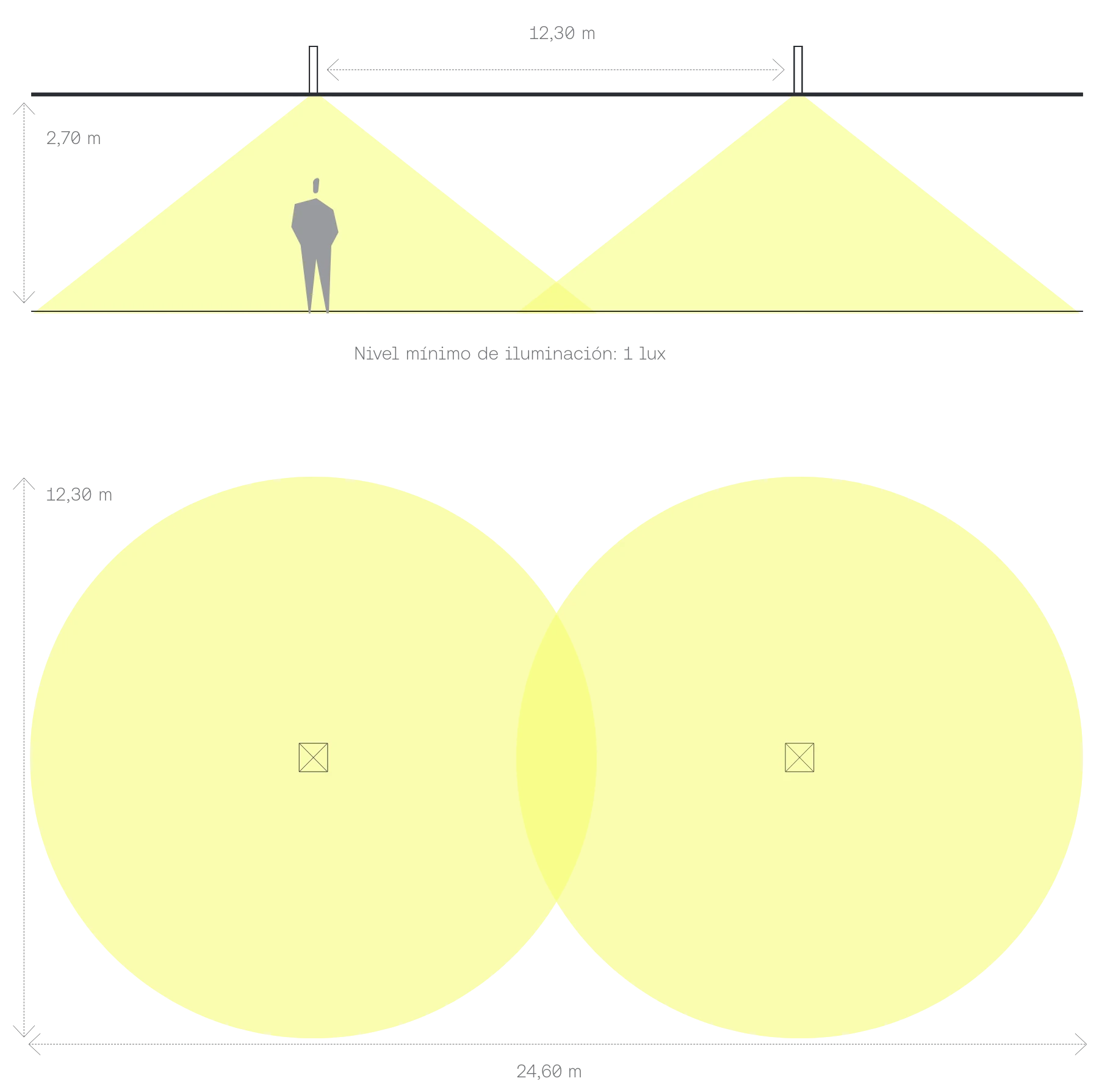
Interdistances: technical data and graphs.
Example of interdistance made with the luminaire installed in a 2.7 m high ceiling.
Battery charging and maintenance system.
The SPICA series has been designed in various models with 1, 2 and 3 hours of autonomy. A microprocessed charging system was incorporated in the TCA and DALI autotests, the Daisalux R&D&I team developing a specific charging firmware for LiFePO4 batteries.
Once charged and after the first 24 hours of charging (UNE 60598-2-22 standard) the batteries will only receive one one-minute pulse of energy every 480 minutes to keep them fully charged.
External battery maintenance reduces the operating temperature of the batteries, extending their useful life and considerably reducing the luminaire’s energy consumption. A temperature probe has also been built in with the batteries, serving as a safety feature to protect the luminaire in the event it reaches a high temperature threshold, for whatever reason.
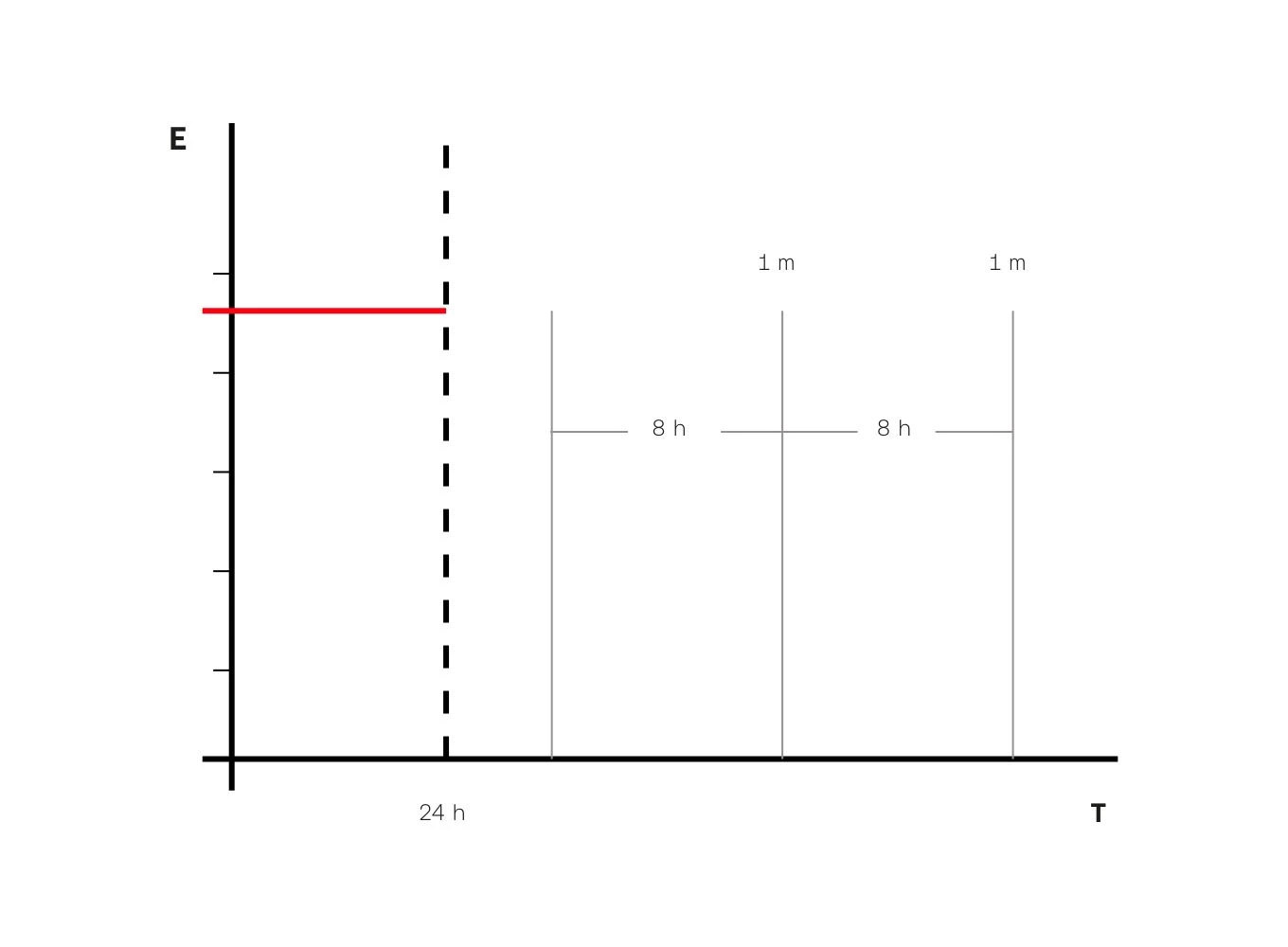
Charge graph. Energy – Time.
Heat dissipation technology: technical data and graphics.
The heat dissipation system has been designed and calculated using CFD (Computational Fluid Dynamics) simulations as support.
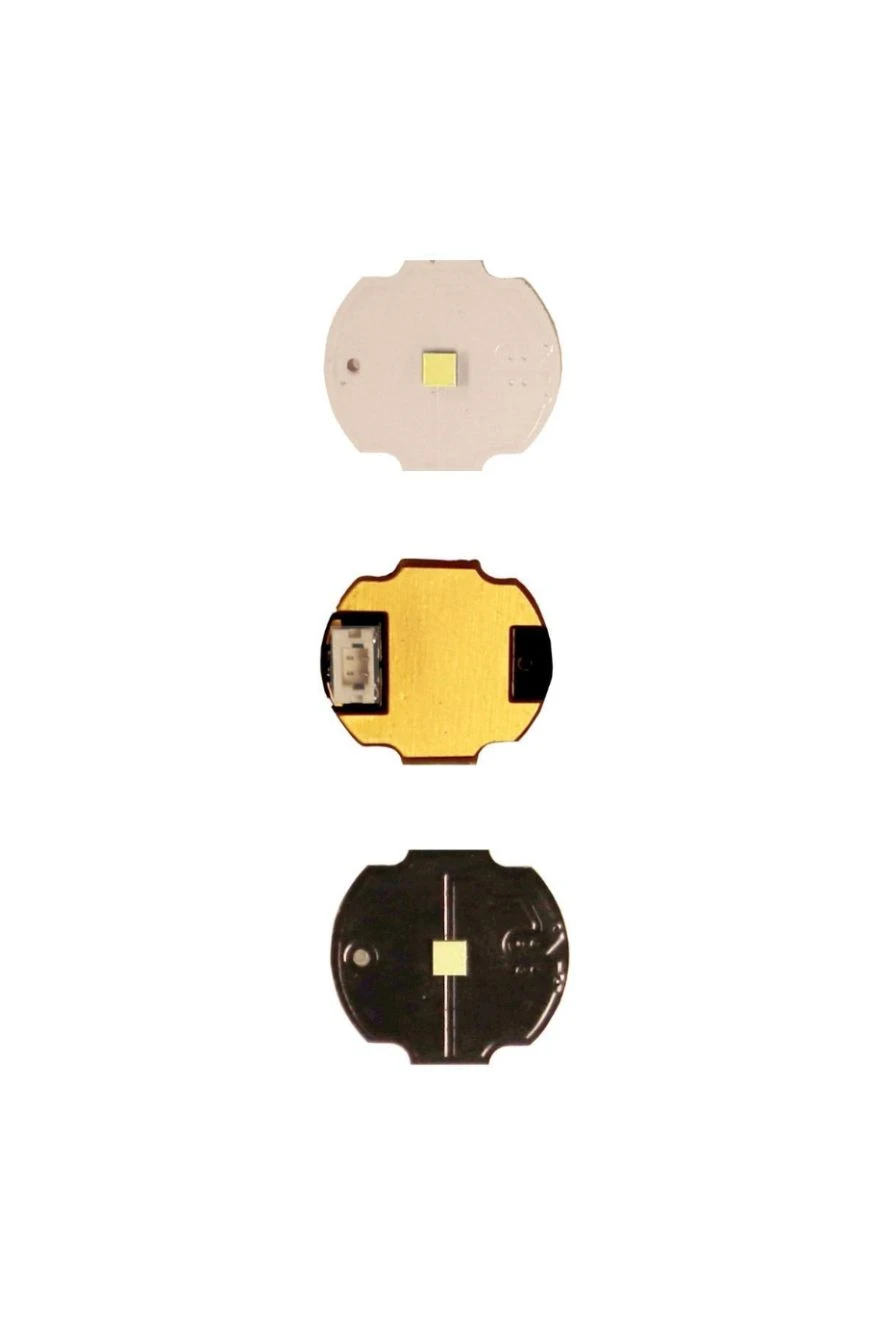
The high-efficiency LED is housed in an aluminium-designed printed circuit board, which helps conduct heat to the back side, where a completely smooth layer of ENIG has been applied. This layer features a chemical deposition of gold and nickel that helps to transfer heat to the heatsink, keeping the PCB at the optimal temperature.
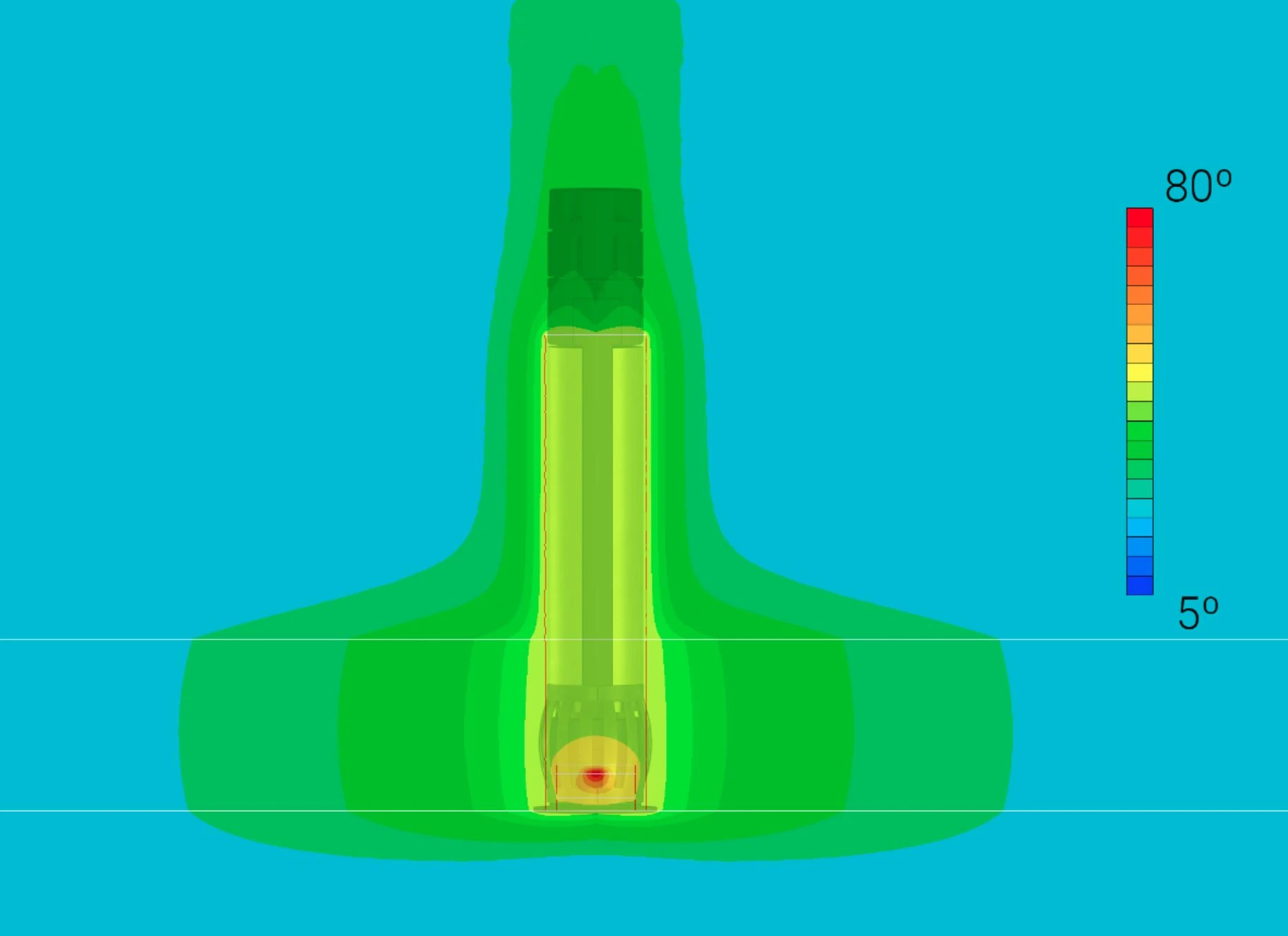
CFD heat simulations
Photograph of printed circuit board (front and back)
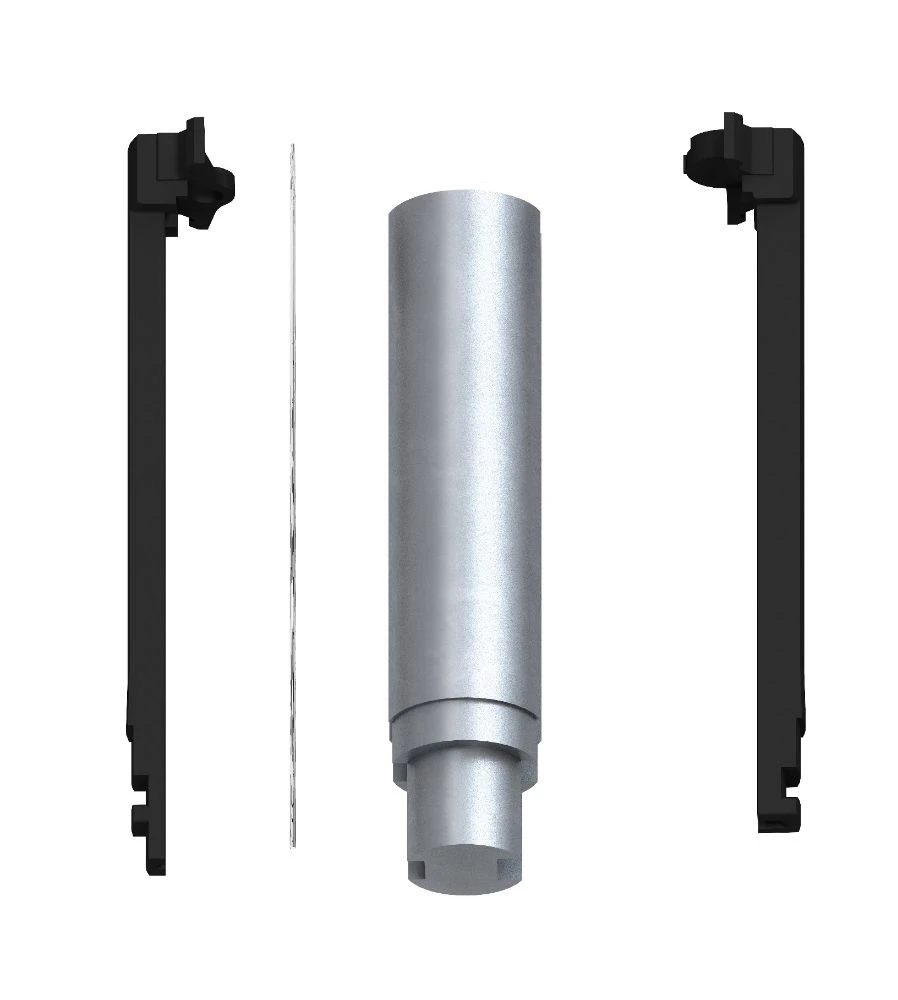
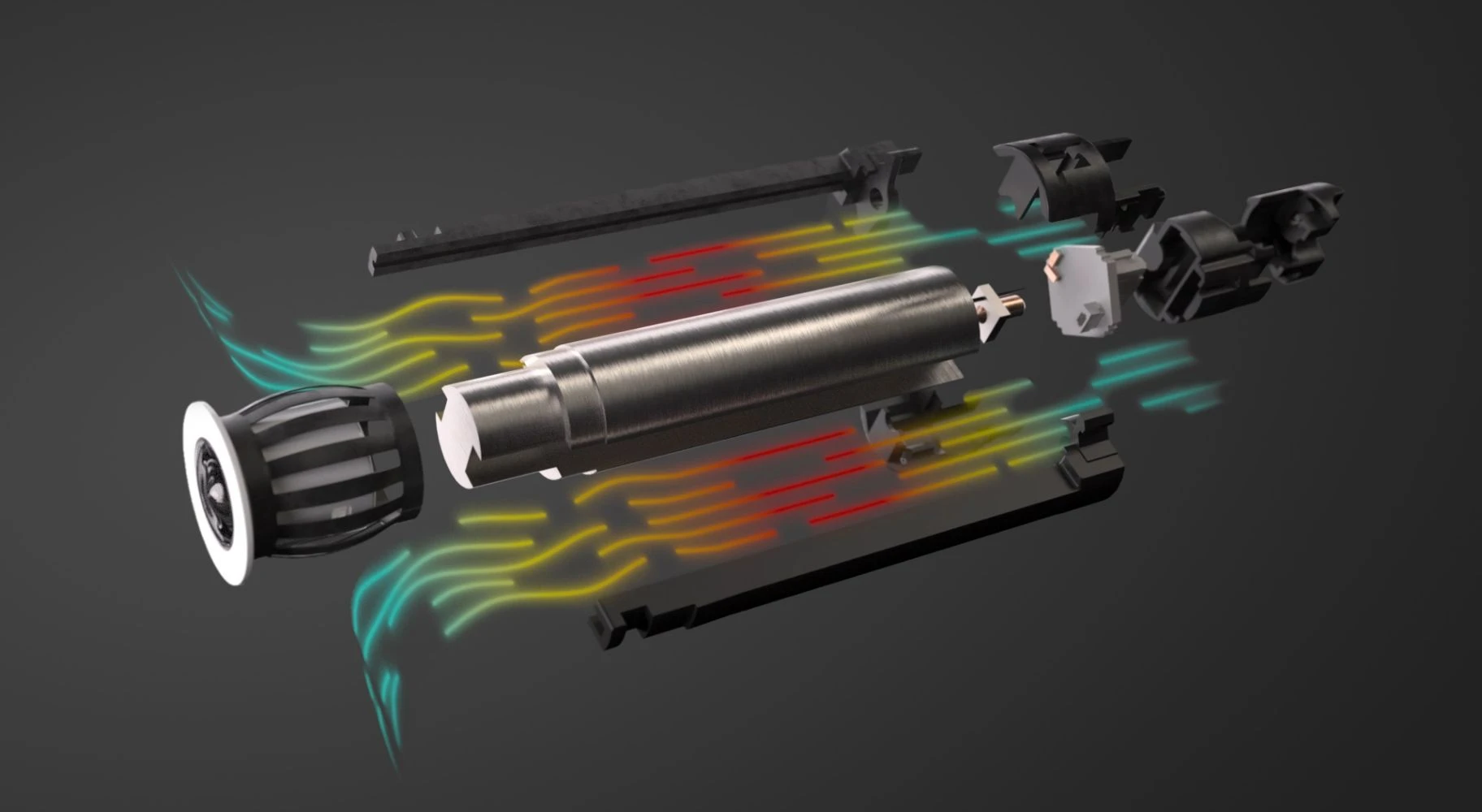
The heat sink, which is cylindrical in shape and has a satin-finished aluminium outer layer, allows heat to be transferred to the air by thermal convection.
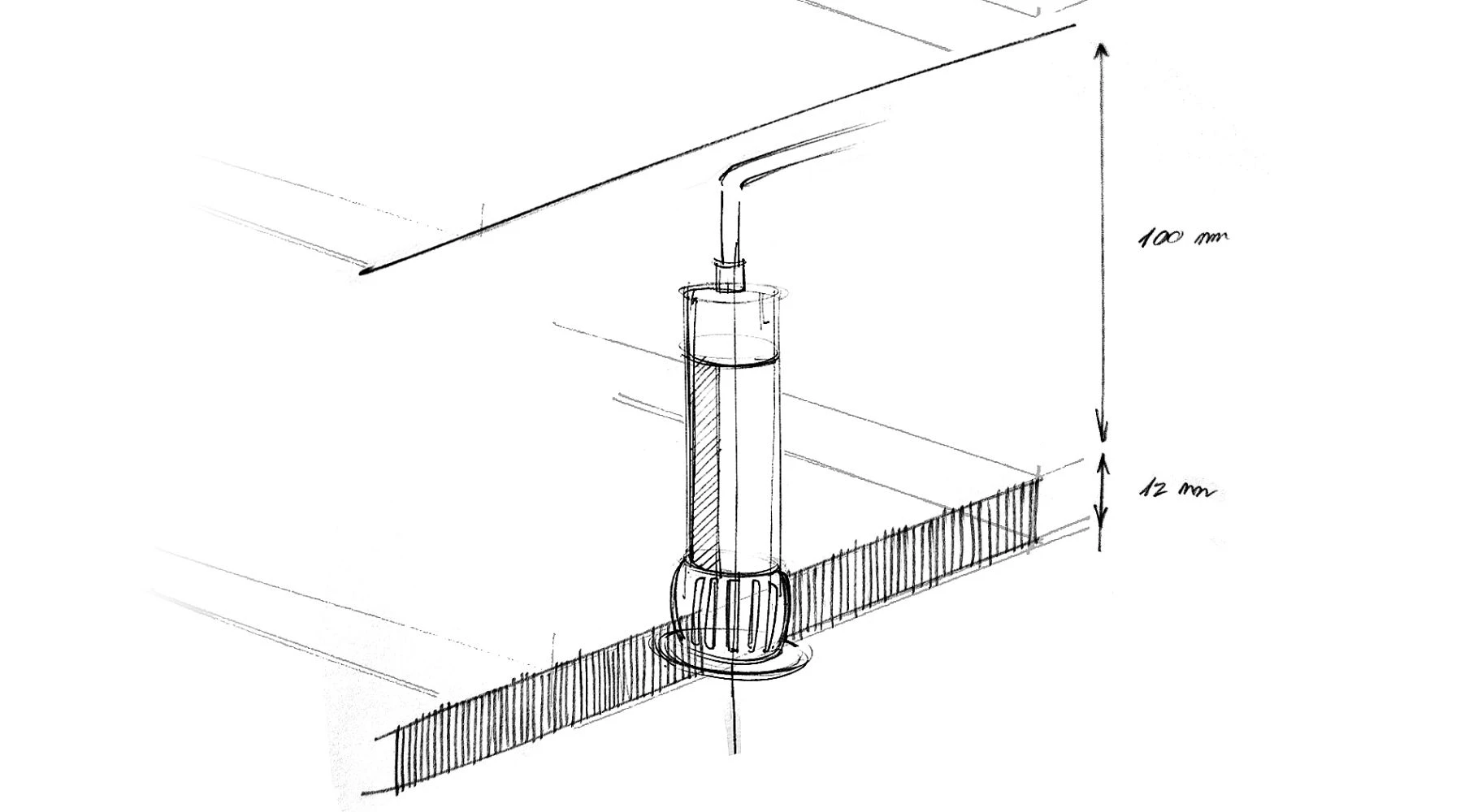
In-ceiling installation.
SPICA has been designed for drop ceilings and suspended ceilings and can be installed in surfaces up to 45 mm thick. Thin ceilings require a washer attached to the non-visible part, which is used to create the same level of support as a thick ceiling (AMTF SPICA).